Black Julius: The Forgotten Black Defender Who Helped Save Sackets Harbor

Before the politics, before the protests, before the headlines — there was Black Julius
By Hans Wilder
Every summer, thousands visit Sackets Harbor Battlefield State Historic Site to watch reenactments, eat ice cream by the harbor, admire sailboats, and celebrate one of the most important military sites in American history.
Most have no idea that one of the men who helped save Sackets Harbor in 1812 was a Black man known simply as “Black Julius.”
And perhaps that tells us something about America.
Not because the story was hidden in some grand conspiracy. Northern New York has actually done a decent job preserving fragments of his legacy. But because history has a funny habit of sanding down the rough edges until the people who actually held the line become footnotes beneath gift shops, political arguments, and waterfront tourism brochures.
Next weekend marks another anniversary of the 2nd Battle of Sackets Harbor — the fight that helped keep the American foothold on Lake Ontario alive during the War of 1812. It was here that the United States built warships, fortified the harbor, and transformed a tiny frontier village into one of the most strategically important military locations in the young republic.
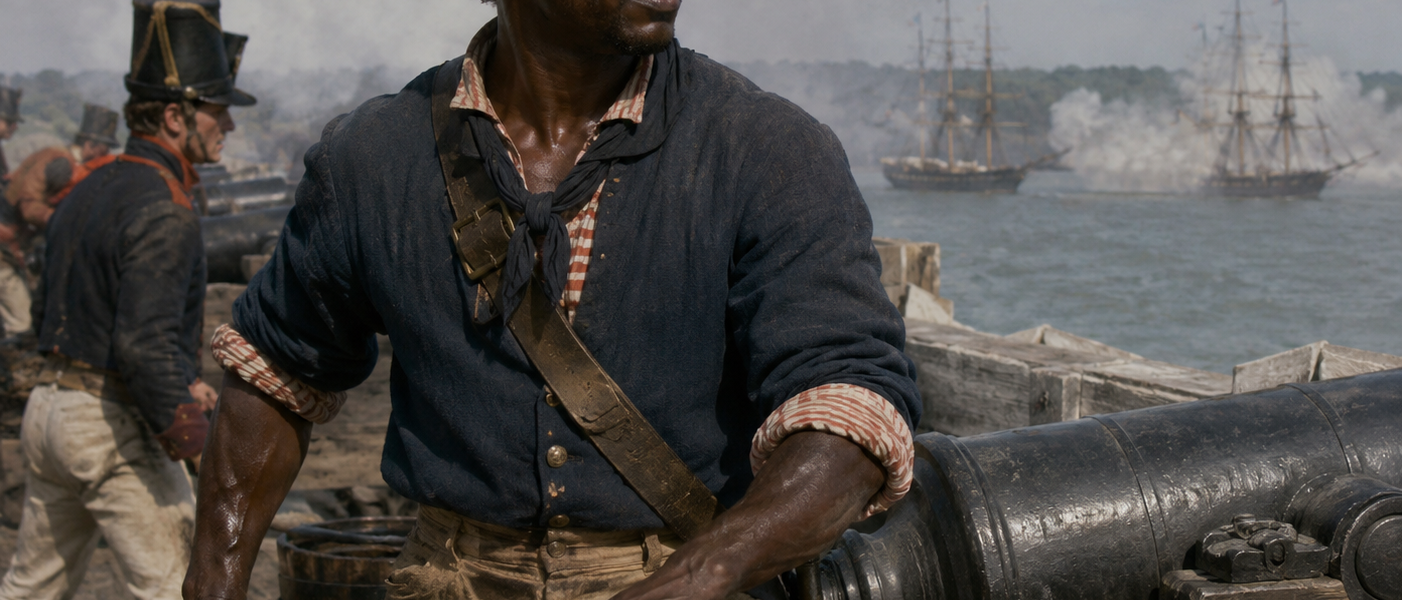
And standing at one of the guns during that first battle “July 19th 1812” was Julius Terry — “Black Julius.”
Historical accounts place him on the crew of the massive 32-pound cannon that returned fire against attacking British warships on July 19, 1812. Contemporary reports described him as serving “with remarkable activity and courage.”
Think about that for a second.
At a time when slavery still existed in New York State — slowly dying, but still present — a Black man stood shoulder-to-shoulder with white sailors and militia in a smoke-filled artillery position defending an American harbor against the British Empire.
Not in Georgia.
Not in Virginia.
Not in some Hollywood movie.
Right here in Jefferson County.
The irony gets even deeper when you realize Sackets Harbor itself was a chaotic mix of cultures, languages, sailors, immigrants, laborers, merchants, and soldiers during the war years. By 1813, the village had exploded into one of the largest military concentrations in New York State. Thousands flooded into the harbor to build ships, haul cannon, and defend the northern frontier.
And among them was Black Julius.
History records him not merely as present, but respected. One account called him “a great favorite in the camp.”
That line matters.
Because it reminds us that real history is usually more complicated than modern people want it to be.
America in 1812 was flawed.
Deeply flawed.
But it was also a place where people thrown together by war sometimes forged bonds that modern politics cannot even comprehend anymore.
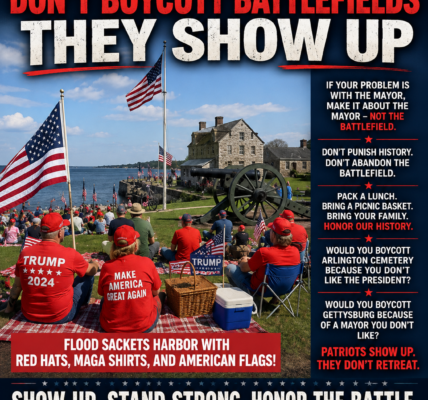
Today, Sackets Harbor finds itself dragged into another emotional national debate — this time involving border policy, protests, demonstrations, and the ongoing controversy surrounding border czar Tom Homan and local reactions tied to businesses and facilities in the village.
People are angry.
People are boycotting.
People are picking sides.
That’s America too.
But long before any of this, before cable news and Facebook warfare and political tribalism, Sackets Harbor was defended by men whose names barely survived the centuries — including one Black artilleryman whose story should probably be taught in every school in Northern New York.
Because Black Julius represents something bigger than modern arguments.
He represents the fact that Sackets Harbor belongs to American history itself.
Not to one political faction.
Not to one mayor.
Not to one controversy.
Not to one week’s headlines.
To history.
And if you walk the battlefield carefully enough, past the lake wind and the old earthworks and the echoes of cannon fire, you can almost picture him there beside that enormous gun, loading powder and shot as British warships closed in through the smoke over Lake Ontario.
A Black man.
On the northern frontier.
Defending the United States in 1812.
That alone is reason enough to remember Sackets Harbor.